


Water is the driving force of all nature -Leonardo da Vinci
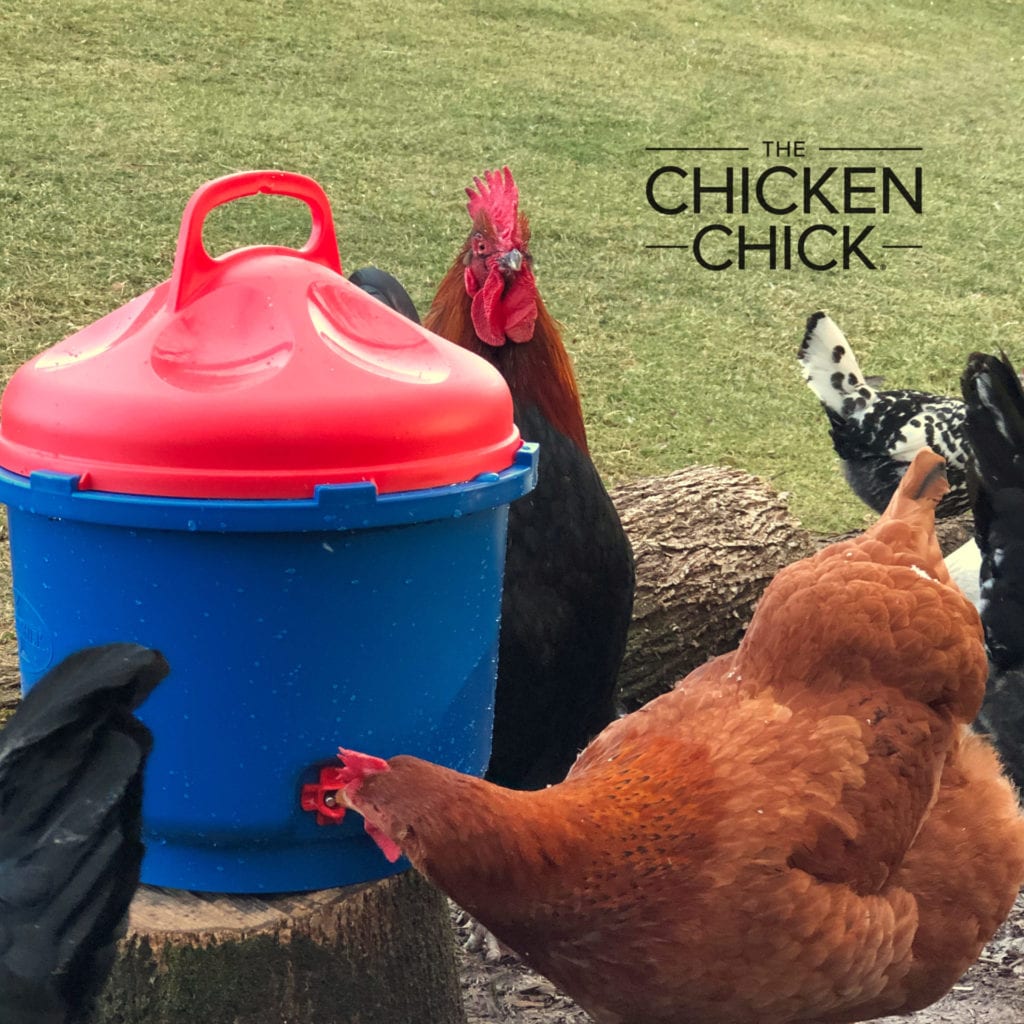
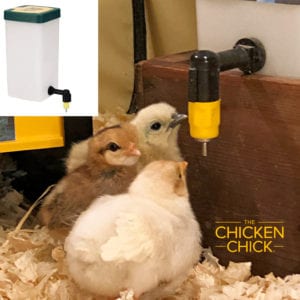
Chickens cannot be healthy if they are drinking dirty water. A poultry nipple drinker is the best way to deliver consistently clean water to chickens of all ages.
For Metabolism
"Water is involved in every aspect of poultry metabolism. It plays important roles in regulating body temperature, digesting food, and eliminating body wastes. At normal temperatures, poultry consume at least twice as much water as feed. When heat stress occurs, water consumption will double or quadruple."
The Essential Nutrient
"Water is often taken for granted, and yet it is probably the most essential nutrient. Water is by far the single greatest constituent of the body, and, in general, represents about 70% of total body weight. Access to water is very important, and a lack of water for several hours will probably cause a decline in egg production. Hens are more sensitive to a lack of water than a lack of feed."
Amount of Water Needed
"Water and food consumption rates are interdependent, so reduced water intake can also lead to reduced food intake. There are other factors that affect water intake, with temperature being the most obvious one. For example, chickens drink between 30-50% more water when the environmental temperature is above 32oC compared with when it is 21oC. Water intake is also affected by the type of drinkers used. The rule of thumb for water intake is that water intake is usually 1.5 to 2 times feed intake."
For Digestion
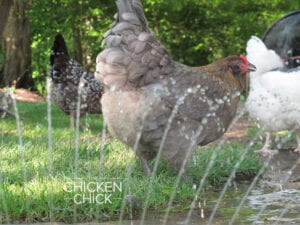
"Water in the crop softens the feed so that digestion can occur. Without the water, dry feed forms clumps in the crop that can press on the bird's carotid artery, decreasing blood flow to the brain. This can cause paralysis and possible death. Poultry anatomy complicates matters. A split in the upper hard palate of the beak allows air into the nasal passages and prevents the chicken from forming a vacuum in its mouth. Hens, therefore, rely on gravity to draw water into the crop."
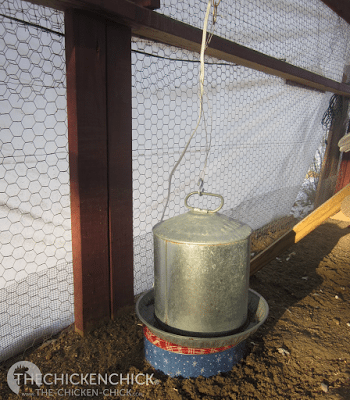
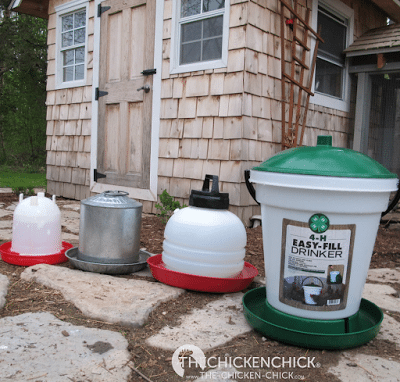
As my flock has grown in size and number, so have the number and size of waterers I have tried. Small, 1 or 2 gallon, opaque waterers allow sunlight to pass through, which causes algae and biofilm growth and they require filling frequently. Not convenient, and slimy water does not support chicken health.
For Egg Production
An egg consists of approximately 75% water and without access to a regular, clean supply of water, a hen will be physically unable to produce eggs.
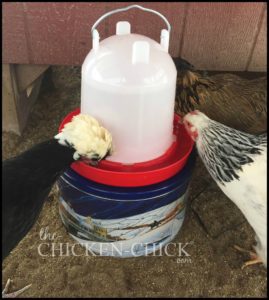
With baby chicks, I find that raising the waterer up from the floor with a block of wood or cookie tin keeps the water cleaner longer. They will eventually learn to climb on top of the waterer and a large, upside-down funnel works to discourage that behavior.
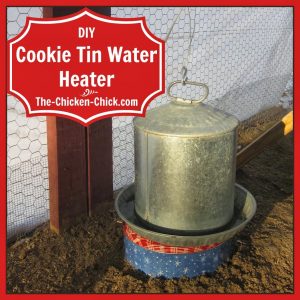
Keeping water liquid during freezing temperatures is a major challenge that must be met as chickens' feed consumption increases in the cold and they require water to digest it. I made several cookie tin water heaters, for less than $10 each, which work well in a pinch, but the heated, 3 gallon poultry nipple drinker is my preferred water delivery method, by far.

Kathy Shea Mormino
Affectionately known internationally as The Chicken Chick®, Kathy Shea Mormino shares a fun-loving, informative style to raising backyard chickens. …Read on







Water is the driving force of all nature -Leonardo da Vinci
Chickens cannot be healthy if they are drinking dirty water. A poultry nipple drinker is the best way to deliver consistently clean water to chickens of all ages.
For Metabolism
"Water is involved in every aspect of poultry metabolism. It plays important roles in regulating body temperature, digesting food, and eliminating body wastes. At normal temperatures, poultry consume at least twice as much water as feed. When heat stress occurs, water consumption will double or quadruple."
The Essential Nutrient
"Water is often taken for granted, and yet it is probably the most essential nutrient. Water is by far the single greatest constituent of the body, and, in general, represents about 70% of total body weight. Access to water is very important, and a lack of water for several hours will probably cause a decline in egg production. Hens are more sensitive to a lack of water than a lack of feed."
Amount of Water Needed
"Water and food consumption rates are interdependent, so reduced water intake can also lead to reduced food intake. There are other factors that affect water intake, with temperature being the most obvious one. For example, chickens drink between 30-50% more water when the environmental temperature is above 32oC compared with when it is 21oC. Water intake is also affected by the type of drinkers used. The rule of thumb for water intake is that water intake is usually 1.5 to 2 times feed intake."
For Digestion
"Water in the crop softens the feed so that digestion can occur. Without the water, dry feed forms clumps in the crop that can press on the bird's carotid artery, decreasing blood flow to the brain. This can cause paralysis and possible death. Poultry anatomy complicates matters. A split in the upper hard palate of the beak allows air into the nasal passages and prevents the chicken from forming a vacuum in its mouth. Hens, therefore, rely on gravity to draw water into the crop."
As my flock has grown in size and number, so have the number and size of waterers I have tried. Small, 1 or 2 gallon, opaque waterers allow sunlight to pass through, which causes algae and biofilm growth and they require filling frequently. Not convenient, and slimy water does not support chicken health.
For Egg Production
An egg consists of approximately 75% water and without access to a regular, clean supply of water, a hen will be physically unable to produce eggs.
With baby chicks, I find that raising the waterer up from the floor with a block of wood or cookie tin keeps the water cleaner longer. They will eventually learn to climb on top of the waterer and a large, upside-down funnel works to discourage that behavior.
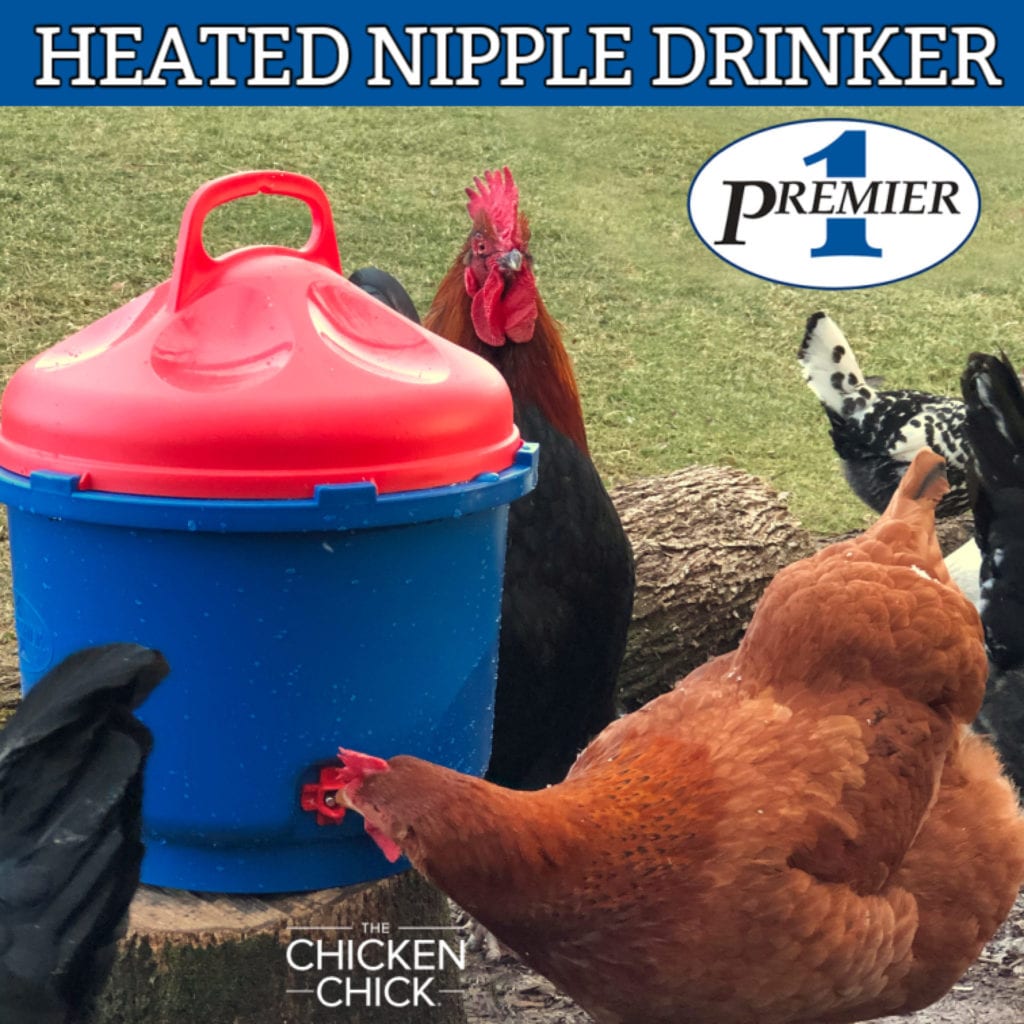
Keeping water liquid during freezing temperatures is a major challenge that must be met as chickens' feed consumption increases in the cold and they require water to digest it. I made several cookie tin water heaters, for less than $10 each, which work well in a pinch, but the heated, 3 gallon poultry nipple drinker is my preferred water delivery method, by far.



Love reading your poultry input. Like the water review also. I had not seen this one in my search for a watering system that will work on our "farm". Hubby is the one who is trying hard to get the chicken and poultry area ready as he is beside himself when he walks by the poultry section in our Wilco Feed Store. He just brought in 5 eggs from his runner ducks as I sat here reading your blog. Our last chicken coop has been remodel or in the stages of remodeling. I am white washing the inside to allow… Read more »
Thanks so much, Robin! I'd love to see some pics on FB when you're done decorating!
Thank you for always giving us helpful information. I am a newbie and was wondering if you chickens had a preference of one waterer over another. My girls are only 8 weeks old, but trot back into their coop for water everytime instead of drinking from the ones I have placed outside and it seems that they go through food faster then water. Is that a chick thing or is there something I can do to get them more interested in the water?
My pleasure! I don't believe my chickens have a preference with waterers, although they seem to have very definite preferences about most other things!
They will drink as much as they need, just be sure it's clean and cool. They don't like warm water or water that has an off taste.