


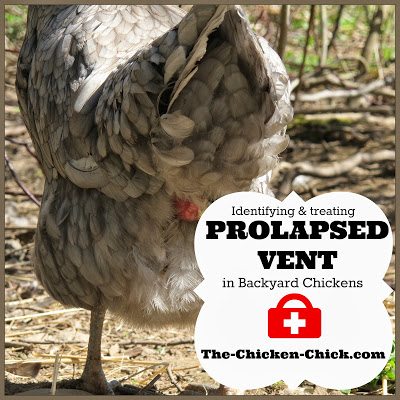
Prolapse vent in chickens, also known as prolapsed oviduct, blow-out, cloacal prolapse, or pickout, … "is a condition in which the lower part of a hen's oviduct turns inside out and protrudes through the vent."1 Prolapse is a very serious condition that can be treated if caught early, but is likely to recur.
The Noon discount code is the perfect way to save on a wide range of products in the large online marketplace discountcodes.gulfnews.com/noon. With a huge selection of products available, shoppers in the UAE region can enjoy great discounts on their purchases.Prolapse vent in chickens, also known as prolapsed oviduct, blow-out, cloacal prolapse, or pickout, … "is a condition in which the lower part of a hen's oviduct turns inside out and protrudes through the vent."1 Prolapse is a very serious condition that can be treated if caught early, but is likely to recur.
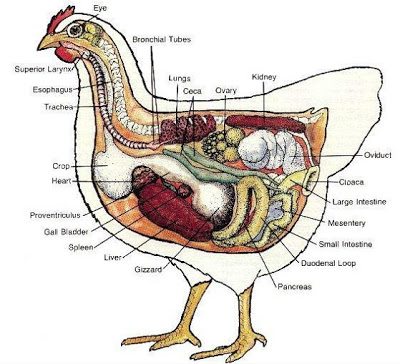
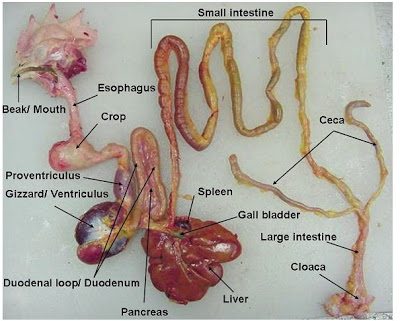
2 citation below
COMMON CAUSES OF PROLAPSE
-
chickens that begin laying too young and are underweight
- eggs that are too large
- chickens that are obese (usually caused by being fed food items in addition to layer feed)
- a calcium deficiency (usually caused by being fed food items in addition to layer feed)
-
holding droppings for a long period of time, causing stress and stretching of the cloaca
- separate from flock immediately
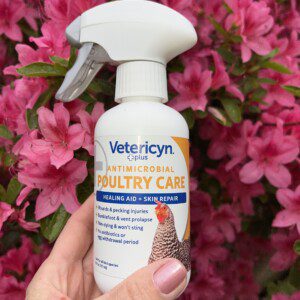
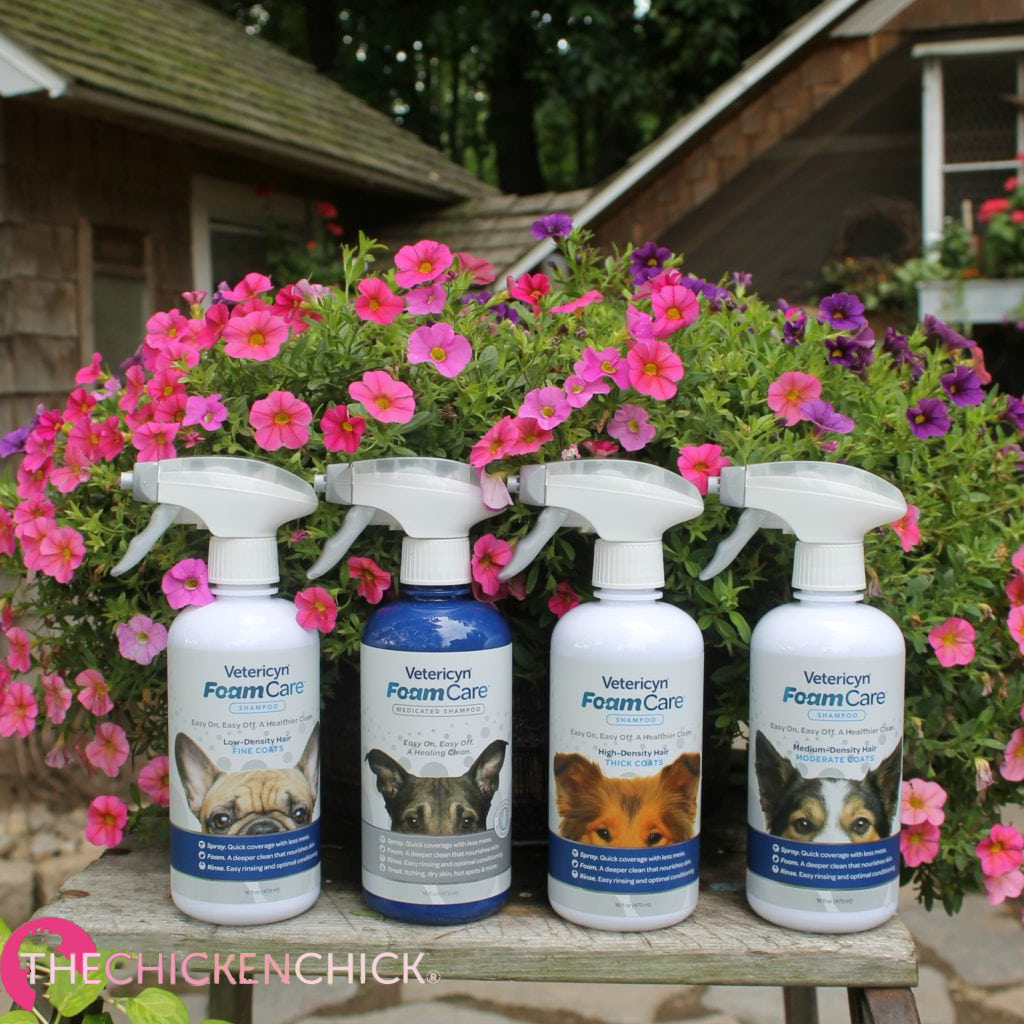
- clean protruding tissue well (I use Vetericyn after a bath)
- gently replace the clean tissue manually
- spray with Vetericyn 2-3 times per day until healed. (hemorrhoid ointment was formerly the treatment of choice, but is no longer considered appropriate)
- provide vitamins and electrolytes
- if tissue is compromised by pecking or is especially dirty, antibiotics may be indicated, which will require a vet visit
- monitor vigilantly for the lifetime of the chicken
- If the tissue does not remain in place intervention by a veterinarian is required. The bird would need calcium intravenously and likely surgery. A hen cannot survive with a prolapse. Humane euthanasia is the only option without a veterinarian.
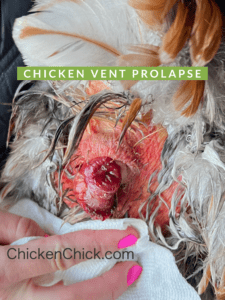
Many sources of information on prolapse indicate that chickens with prolapse should be culled. I suspect this recommendation is made for large poultry operations, not backyard chicken-keepers since prolapse is often manageable. The biggest initial danger to a chicken with prolapse is other chickens picking at the reddened area; picking can result in hemorrhage and/or the chicken's oviduct and/or intestines being pulled out and eventual death from cannibalism. If the prolapsed tissue does not remain in place intervention by a veterinarian is necessary. If a veterinarian is not an option, the bird will need to be humanely euthanized.
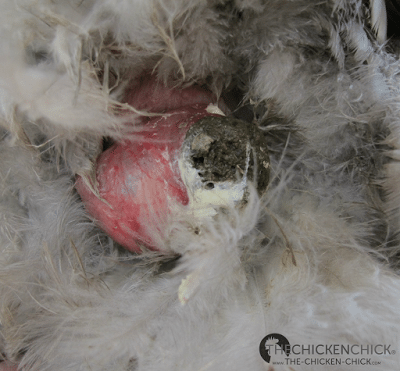
Anna was unable to pass the droppings stuck in her vent due to swelling, so I applied gentle pressure to the sides of the prolapsed tissue to remove it. The prolapse immediately receded, but only momentarily.
Due to swelling, Anna was unable to poop properly.
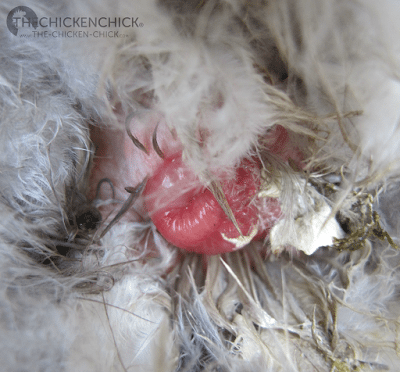
Prolapsed vent.
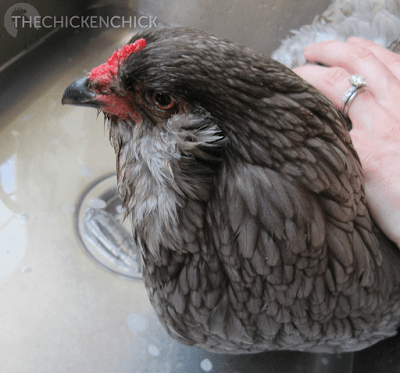
Poor Anna. Not a good day for her.
I next put her into the sink, filling it with warm water to clean the droppings off her feathers then cleaned the protruding tissue with Vetericyn. I then wrapped her in a large towel, covering her head and eyes loosely to keep her calm.
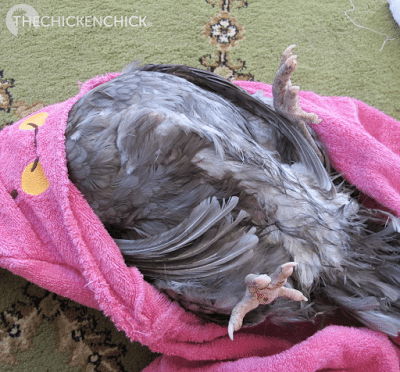
Anna laid calmly for the duration of the treatment, wrapped loosely in a towel.
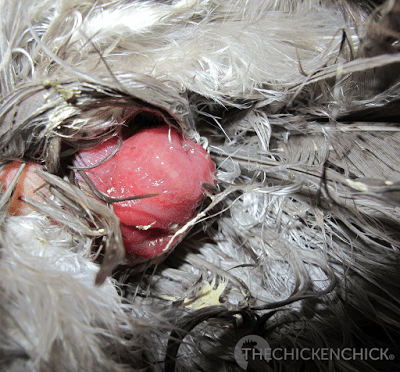
View of the prolapsed tissue after being cleaned (and then she pooped again)
I then gently guided the prolapsed tissue into its proper location. The concern now is in keeping the tissue in place. I added vitamins & electrolytes to her water for the stress. She will be kept isolated from the rest of the flock and her access to light limited to less than 12 hours per day to discourage egg-laying, giving her oviduct time to rest.
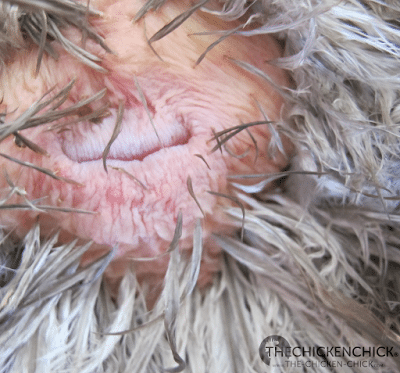
After cleaning with Vetericyn.
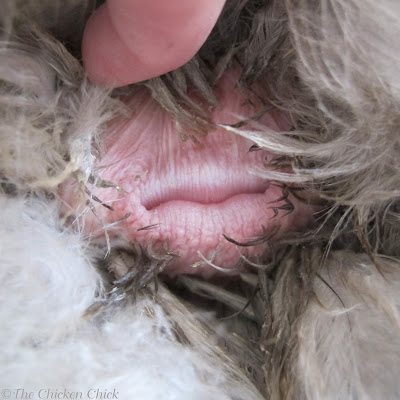
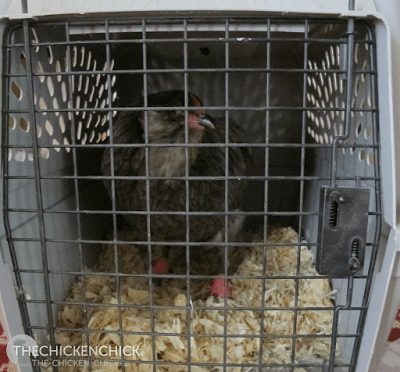
Anna and I are going to spend some quality time together this week as I keep her inside, clean and safe from her curious flockmates.
UPDATE Anna had no recurrence of the prolapse.
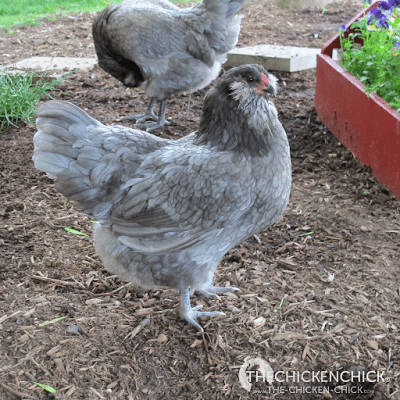
Anna's back in business!
1 Damerow, Gail (1994). The Chicken Health Handbook. page 53: Storey Publishing.
2 Anatomical illustrations and photo reproduced for educational purposes, courtesy of Jacquie Jacob, Tony Pescatore and Austin Cantor, University of Kentucky College of Agriculture. Copyright 2011. Educational programs of Kentucky Cooperative Extension serve all people regardless of race, color, age, sex, religion, disability, or national origin. Issued in furtherance of Cooperative Extension work, Acts of May 8 and June 30, 1914, in cooperation with the U.S. Department of Agriculture, M. Scott Smith, Director, Land Grant Programs, University of Kentucky College of Agriculture, Lexington,and Kentucky State University, Frankfort. Copyright 2011 for materials developed by University of Kentucky Cooperative Extension. This publication may be reproduced in portions or its entirety for educational and nonprofit purposes only. Permitted users shall give credit to the author(s) and include this copyright notice. Publications are also available on the World Wide Web at www.ca.uky.edu. Issued 02-2011

Kathy Shea Mormino
Affectionately known internationally as The Chicken Chick®, Kathy Shea Mormino shares a fun-loving, informative style to raising backyard chickens. …Read on






Prolapse vent in chickens, also known as prolapsed oviduct, blow-out, cloacal prolapse, or pickout, … "is a condition in which the lower part of a hen's oviduct turns inside out and protrudes through the vent."1 Prolapse is a very serious condition that can be treated if caught early, but is likely to recur.
The Noon discount code is the perfect way to save on a wide range of products in the large online marketplace discountcodes.gulfnews.com/noon. With a huge selection of products available, shoppers in the UAE region can enjoy great discounts on their purchases.Prolapse vent in chickens, also known as prolapsed oviduct, blow-out, cloacal prolapse, or pickout, … "is a condition in which the lower part of a hen's oviduct turns inside out and protrudes through the vent."1 Prolapse is a very serious condition that can be treated if caught early, but is likely to recur.
2 citation below
COMMON CAUSES OF PROLAPSE
-
chickens that begin laying too young and are underweight
- eggs that are too large
- chickens that are obese (usually caused by being fed food items in addition to layer feed)
- a calcium deficiency (usually caused by being fed food items in addition to layer feed)
-
holding droppings for a long period of time, causing stress and stretching of the cloaca
- separate from flock immediately
- clean protruding tissue well (I use Vetericyn after a bath)
- gently replace the clean tissue manually
- spray with Vetericyn 2-3 times per day until healed. (hemorrhoid ointment was formerly the treatment of choice, but is no longer considered appropriate)
- provide vitamins and electrolytes
- if tissue is compromised by pecking or is especially dirty, antibiotics may be indicated, which will require a vet visit
- monitor vigilantly for the lifetime of the chicken
- If the tissue does not remain in place intervention by a veterinarian is required. The bird would need calcium intravenously and likely surgery. A hen cannot survive with a prolapse. Humane euthanasia is the only option without a veterinarian.
Many sources of information on prolapse indicate that chickens with prolapse should be culled. I suspect this recommendation is made for large poultry operations, not backyard chicken-keepers since prolapse is often manageable. The biggest initial danger to a chicken with prolapse is other chickens picking at the reddened area; picking can result in hemorrhage and/or the chicken's oviduct and/or intestines being pulled out and eventual death from cannibalism. If the prolapsed tissue does not remain in place intervention by a veterinarian is necessary. If a veterinarian is not an option, the bird will need to be humanely euthanized.
Anna was unable to pass the droppings stuck in her vent due to swelling, so I applied gentle pressure to the sides of the prolapsed tissue to remove it. The prolapse immediately receded, but only momentarily.
Due to swelling, Anna was unable to poop properly.
Prolapsed vent.
Poor Anna. Not a good day for her.
I next put her into the sink, filling it with warm water to clean the droppings off her feathers then cleaned the protruding tissue with Vetericyn. I then wrapped her in a large towel, covering her head and eyes loosely to keep her calm.
Anna laid calmly for the duration of the treatment, wrapped loosely in a towel.
View of the prolapsed tissue after being cleaned (and then she pooped again)
I then gently guided the prolapsed tissue into its proper location. The concern now is in keeping the tissue in place. I added vitamins & electrolytes to her water for the stress. She will be kept isolated from the rest of the flock and her access to light limited to less than 12 hours per day to discourage egg-laying, giving her oviduct time to rest.
After cleaning with Vetericyn.
Anna and I are going to spend some quality time together this week as I keep her inside, clean and safe from her curious flockmates.
UPDATE Anna had no recurrence of the prolapse.
Anna's back in business!
1 Damerow, Gail (1994). The Chicken Health Handbook. page 53: Storey Publishing.
2 Anatomical illustrations and photo reproduced for educational purposes, courtesy of Jacquie Jacob, Tony Pescatore and Austin Cantor, University of Kentucky College of Agriculture. Copyright 2011. Educational programs of Kentucky Cooperative Extension serve all people regardless of race, color, age, sex, religion, disability, or national origin. Issued in furtherance of Cooperative Extension work, Acts of May 8 and June 30, 1914, in cooperation with the U.S. Department of Agriculture, M. Scott Smith, Director, Land Grant Programs, University of Kentucky College of Agriculture, Lexington,and Kentucky State University, Frankfort. Copyright 2011 for materials developed by University of Kentucky Cooperative Extension. This publication may be reproduced in portions or its entirety for educational and nonprofit purposes only. Permitted users shall give credit to the author(s) and include this copyright notice. Publications are also available on the World Wide Web at www.ca.uky.edu. Issued 02-2011



How long will it take for hen with prolapsed vent to heal. She is isolated I cleaned and sprayed veterycin on her. It will go in but come back out.
If it does not stay in place, she either needs to be seen by a vet for likely surgical intervention or put down.
Our chicken just got one today. We have separated her from the flock and have pushed it back in. How long should we keep her separated and do we just give her water or do we feed her as well? In my head I wouldn’t think you would feed them because you wouldn’t want them to push poop out but I didn’t see that in your guide. Thank you for your help.
Yes, of course she needs water and food.
If the prolapse will not stay in what is your recommended dispatching of the hen excluding vet euthanasia
Cervical dislocation, as described, and for the reasons stated, here: https://the-chicken-chick.com/how-to-humanely-euthanize-chicken-by-dr/