


WHAT IS A DUST BATH?
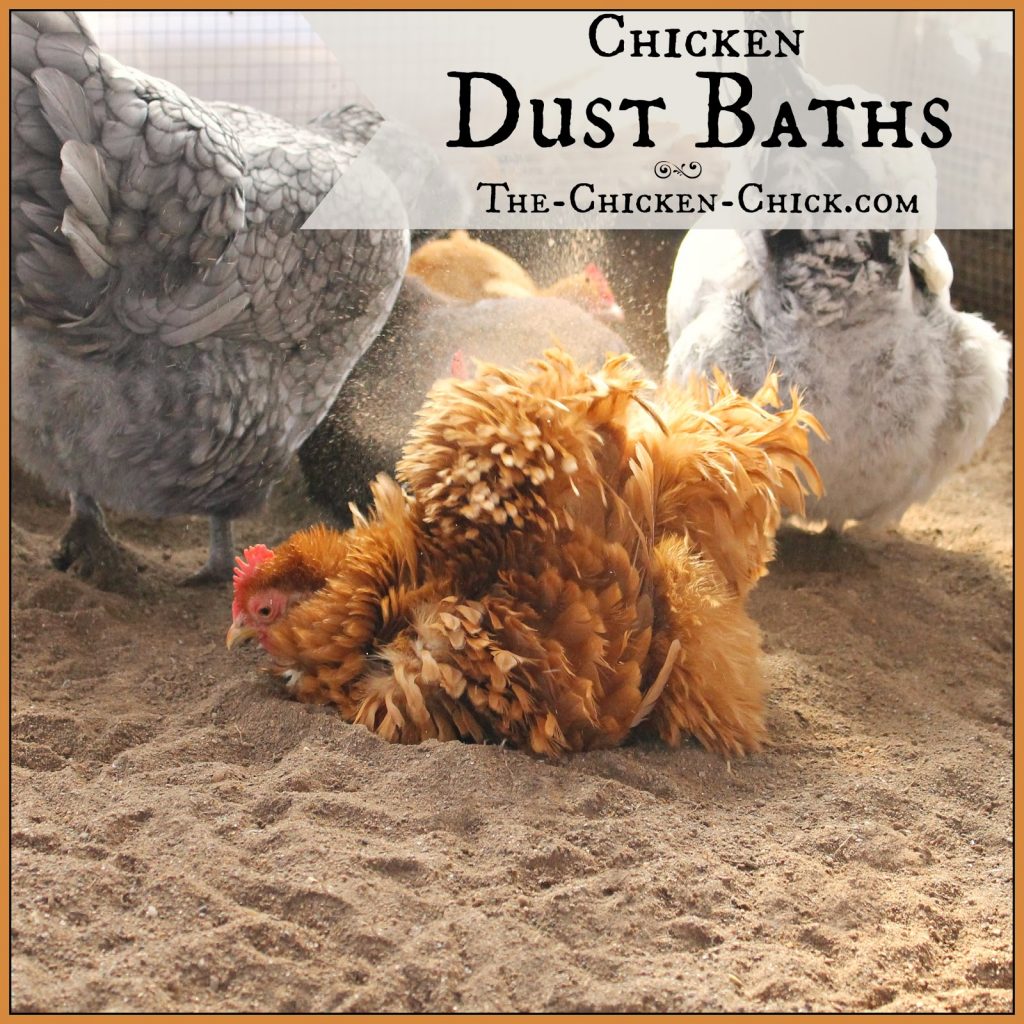
Chickens care for their feathers and skin by digging shallow ditches in soil, mulch, sand, even pine shavings, then tossing it onto themselves. The dirt coats their feathers and settles next to their skin, absorbing excess moisture and oil. It also serves to repel parasites that could set up housekeeping among the feathers, causing skin and feather damage, irritation, weight loss and interfere with egg production and fertility. Dust baths also serve as a recreational activity, a social event and exercise- think of it as chicken yoga! In hot weather, a chicken digs down into the ground to rest in cooler soil to lower its body temperature.
At the end of a dust bath, the dirt is shaken off and the chicken proceeds to preen and groom its feathers back into place.
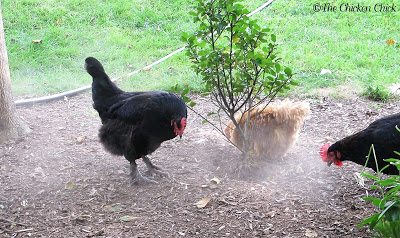
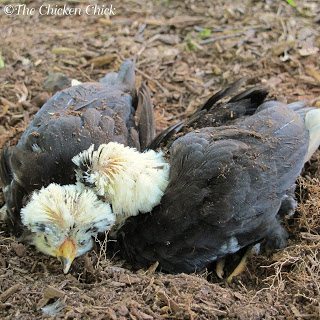
Post dust bath shake-out
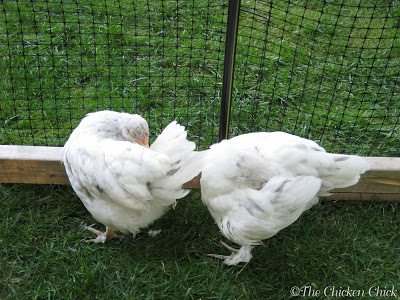
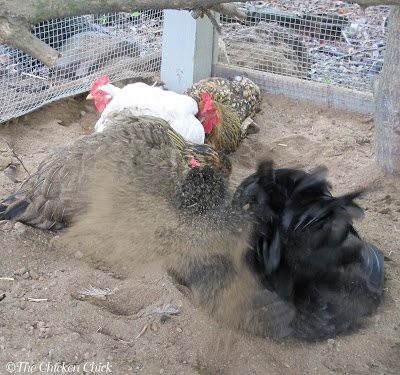
Synchronized preening
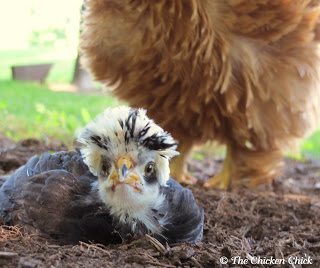
From a very early age, chickens enjoy tossing bedding up into their feathers and settling down into the shallow ditches they have made. Baby chicks appreciate a sand box for this purpose, but will dust-bathe in pine shavings if sand is not made available.
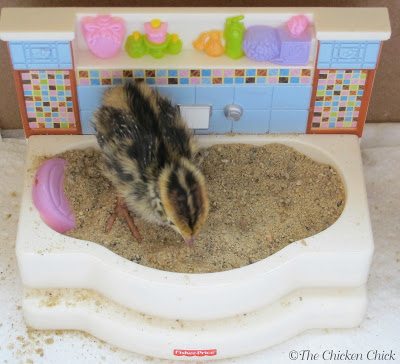
This is a baby quail.
Quail enjoy dust baths as much as chickens!
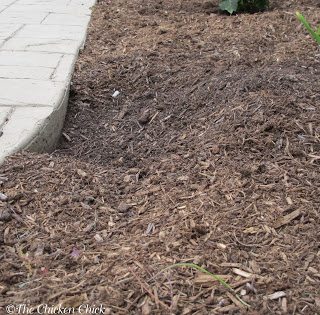
Mulch beds are a favorite dust bathing location for my chickens
DUST-BATHING AREAS
When I was a new chicken-keeper, my chickens were confined to the run, which consisted of clay-laden earth that was much too dense for an enjoyable dust bath. I had read different suggestions for concocting dust baths that ran the gamut from sand to fireplace ash, road debris, food grade diatomaceous earth and garden powder, but none of those additives are necessary and some are dangerous. Wood ash becomes lye when wet. Road debris often contains salt and petroleum products and food grade diatomaceous earth is a hazard in a variety of ways to chicken health and human health. (read about them here) I recommend plain construction grade sand or clean, dry dirt from the chicken yard. The truth is: dirt or sand perform all of the functions chickens require of a dust bath- there is no need for additives. I use sand on the floor of my chicken runs and for litter in all of my coops and the chickens dust-bathe in all seasons and weather conditions.
ABOUT DIATOMACEOUS EARTH
I am often asked about the utility and safety of food grade, diatomaceous earth (DE) in dust bath areas. Not only is it unnecessary, it is unhealthy for chickens, humans and the environment. For a closer look at the hazards of DE, read these articles: here and here. I do not recommend the use of DE around chickens for any purpose.
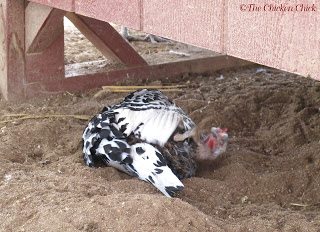
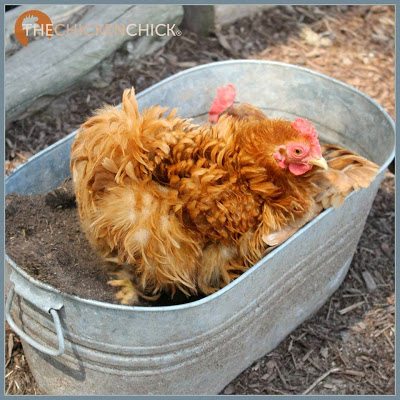
Winter dust bath in the sand, under the coop. As long as the sand stays dry it will remain loose and good for dust-bathing all year
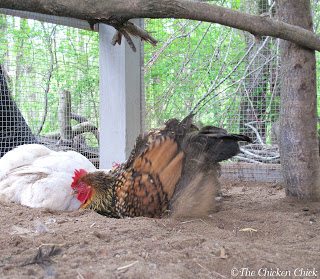
Thank goodness for that third eyelid!

Kathy Shea Mormino
Affectionately known internationally as The Chicken Chick®, Kathy Shea Mormino shares a fun-loving, informative style to raising backyard chickens. …Read on






WHAT IS A DUST BATH?
Chickens care for their feathers and skin by digging shallow ditches in soil, mulch, sand, even pine shavings, then tossing it onto themselves. The dirt coats their feathers and settles next to their skin, absorbing excess moisture and oil. It also serves to repel parasites that could set up housekeeping among the feathers, causing skin and feather damage, irritation, weight loss and interfere with egg production and fertility. Dust baths also serve as a recreational activity, a social event and exercise- think of it as chicken yoga! In hot weather, a chicken digs down into the ground to rest in cooler soil to lower its body temperature.
At the end of a dust bath, the dirt is shaken off and the chicken proceeds to preen and groom its feathers back into place.
Post dust bath shake-out
Synchronized preening
From a very early age, chickens enjoy tossing bedding up into their feathers and settling down into the shallow ditches they have made. Baby chicks appreciate a sand box for this purpose, but will dust-bathe in pine shavings if sand is not made available.
This is a baby quail.
Quail enjoy dust baths as much as chickens!
Mulch beds are a favorite dust bathing location for my chickens
DUST-BATHING AREAS
When I was a new chicken-keeper, my chickens were confined to the run, which consisted of clay-laden earth that was much too dense for an enjoyable dust bath. I had read different suggestions for concocting dust baths that ran the gamut from sand to fireplace ash, road debris, food grade diatomaceous earth and garden powder, but none of those additives are necessary and some are dangerous. Wood ash becomes lye when wet. Road debris often contains salt and petroleum products and food grade diatomaceous earth is a hazard in a variety of ways to chicken health and human health. (read about them here) I recommend plain construction grade sand or clean, dry dirt from the chicken yard. The truth is: dirt or sand perform all of the functions chickens require of a dust bath- there is no need for additives. I use sand on the floor of my chicken runs and for litter in all of my coops and the chickens dust-bathe in all seasons and weather conditions.
ABOUT DIATOMACEOUS EARTH
I am often asked about the utility and safety of food grade, diatomaceous earth (DE) in dust bath areas. Not only is it unnecessary, it is unhealthy for chickens, humans and the environment. For a closer look at the hazards of DE, read these articles: here and here. I do not recommend the use of DE around chickens for any purpose.
Winter dust bath in the sand, under the coop. As long as the sand stays dry it will remain loose and good for dust-bathing all year
Thank goodness for that third eyelid!

My chickens will not eat the scratch I bought them. It is mostly corn. I understand that corn warms their bodies and it was 95 degrees today with a heat index of 112. What should I do? Should I wait till winter or just find someone to take it?
As far as the heat is concerned, I keep ice in their water and they have a wading area that has cool water in it. I also spray the inside of the grassy run with cool water. They are 7 weeks old. Am I doing all the right things?
No. Chickens should not be fed scratch at all. It is like feeding your child popcorn for every meal. Chicks should be fed STARTER FEED until 18 weeks old, then at 18 weeks old on, they need LAYER pellets or LAYER crumbles AND a separate dish of oyster shells. NOTHING ELSE. Please read this article:
https://the-chicken-chick.com/feeding-chickens-at-different-ages/
You should NOT be spraying their run at all. They need a DRY environment in order to be healthy.